
.jpg?width=1490&name=rock-waterfall-slide-pool%20(1).jpg "rock-waterfall-slide-pool (1).jpg")
How rock waterfall pool slides are built, your design options, and what to know before adding one to your pool.
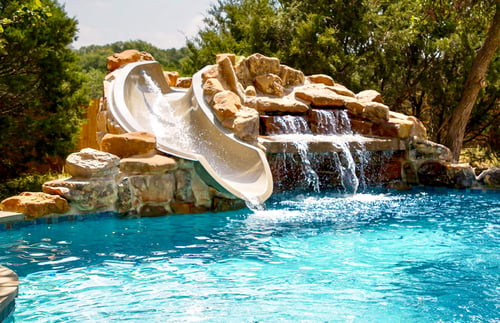
But it’s also one of the most misunderstood.
Costs, construction methods, design tradeoffs, and safety considerations all vary more than most homeowners expect.
This guide breaks down exactly how rock waterfall slides are built, what options matter most, and what to think through before adding one to your pool.
What is a rock waterfall pool slide?
A rock waterfall pool slide is a custom-built slide integrated into a pool’s waterfall or grotto, designed to blend into natural-looking rockwork rather than stand alone on the pool deck.
Key design elements include:
- Height and length
- Shape (straight or curved)
- Color and finish
- Stair layout
Most slides are built one of two ways: using a prefabricated flume or by handcrafting the slide on-site.
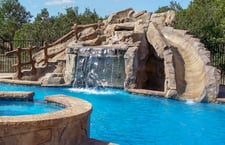
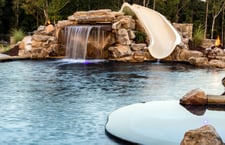
The rockwork in a waterfall or grotto may be faux (left) or natural (right). The material used often depends on the area of the country.
How rock waterfall slides are built
Prefabricated landscape slides
Best for: predictable performance + faster install
- Uses a factory-made flume (riding surface)
- Built to fit the waterfall layout
- Installed with manufacturer hardware
Pros
- Warranty coverage
- Engineered ride performance
Cons
- Less customization
- Limited color options
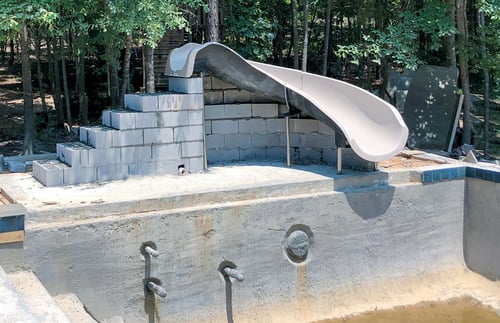
Prefabricated slides use a factory-made flume installed within the waterfall structure.
Handcrafting masonry pool slides
Best for: fully custom, natural look
Pros
- Maximum customization
- Best visual integration
Cons
- Higher cost
- Longer build time
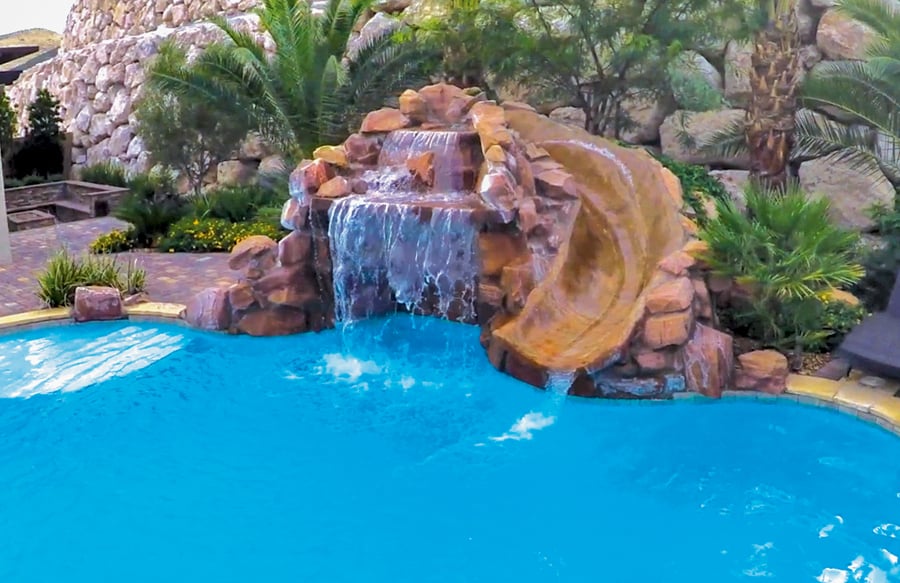
Masonry slides are built on-site and shaped to match surrounding rockwork.
Lower-cost alternative
A standard deck-mounted slide can be placed inside rockwork.
This reduces cost, but usually looks less natural and less integrated than a purpose-built design.
Essential features: stairs and plumbing
Every rock waterfall slide needs two key components: access and water flow.
Stairs
Stairs are custom-built to match the structure and layout.
They can be made from:
- Natural stone
- Masonry
- Gunite/shotcrete
Many designs use irregular stepping pads to create a more natural look.
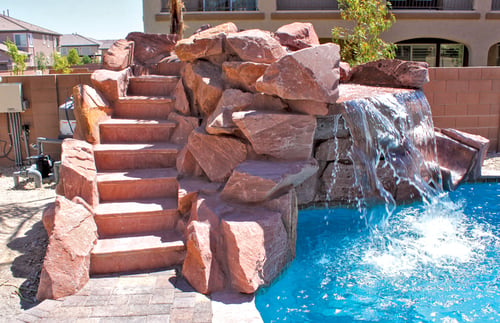
Stair design is customized to match the slide structure and improve access.
Plumbing
Water must run down the slide surface for a smooth ride.
Design options to choose from
Height and length
- Smaller slides: ~5 feet tall
- Larger slides: 10–20+ feet
Taller slides require:
- Larger structures
- Longer runouts
- Bigger splash zones
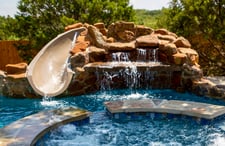
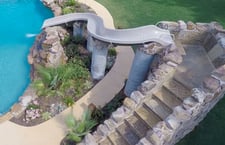
Slide size varies widely based on space, budget, and design goals.
Shape:
Straight slides create faster rides.
Curved slides create a more dynamic ride and blend better into natural rock layouts.
Color and finish:
- Masonry slides can be stained to match rockwork
- Prefabricated flumes come in preset colors
Most designs use neutral earth tones for a cohesive look.
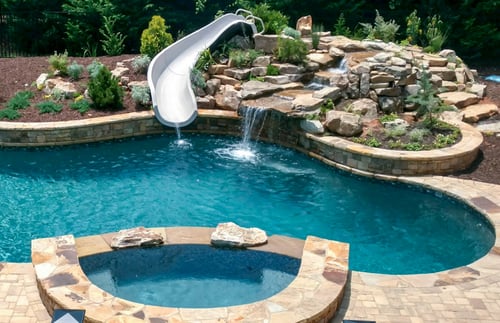
Most designs use neutral tones to blend into the surrounding rock feature.
Open vs. enclosed slides
Most slides use an open flume design.
Enclosed slides are less common but can:
- Hide more of the structure
- Reduce visible debris
Some homeowners prefer open slides for a more comfortable ride experience.
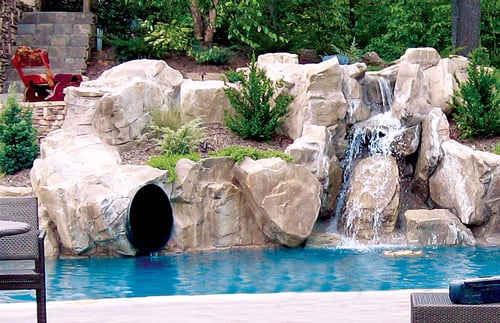
Open slides are more common, while enclosed designs hide more of the structure.
Before you add a slide, answer these questions
- Does your yard allow for a safe landing area?
- Which build type fits your budget: prefab or custom masonry?
- How will the slide impact overall project cost?
- Where will stairs and access be placed?
- Will the design feel integrated or added on?
Planning your rock waterfall slide
Slide design is driven by space, budget, height, and how the feature will be used.
Builders need to plan how people reach the slide and exit safely, including stair placement and traffic flow.
The slide must also fit with the pool’s shape and features like steps, tanning ledges, and spas.
A clear, properly sized landing area is critical for safety.
If your yard includes a slope or hillside, it may be used to support the structure and create a more natural look.
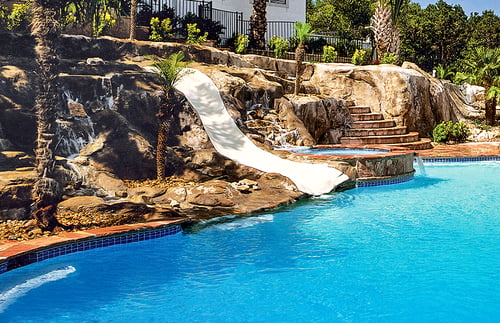
Slopes or hills can sometimes be used to support slide structures.
When a rock waterfall slide makes sense (and when it doesn’t)
Makes sense if:
- You want a resort-style or lagoon-style pool
- You have space for a larger feature
- Your budget allows for custom work
Not ideal if:
- Your backyard is small
- You want a simple, low-cost upgrade
- You prefer a clean, modern pool design
Is a rock waterfall slide worth it?
A rock waterfall slide costs more than a deck-mounted option, but it delivers a completely different level of visual impact.
For high-end, resort-style backyards, it’s one of the few features that can transform the entire space.
If you’re considering one, talk with your pool designer early about layout, cost, and construction options.
For more inspiration, browse our gallery of custom pools with rock waterfall slides.


