
.jpg?width=1490&name=rock-waterfall-slide-pool%20(1).jpg "rock-waterfall-slide-pool (1).jpg")
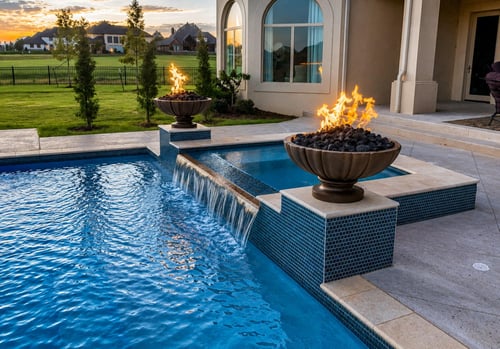
Fire features are one of the most dramatic upgrades you can add to a backyard pool. Whether you want a fire bowl on a raised wall, a decorative fire pit built into the pool structure, or something more custom, this guide covers how each option works, what to expect from the process, and photos to help you visualize what's possible.
How Pool Fire Features Work
Most pool fire features run on natural gas, with a fuel line buried under the deck and connected to a burner inside the feature. Inside the bowl or pit, lava rocks, river stones, or fire glass sit on top of the burner for visual effect.
You have three ignition options:
Manual: You light it yourself, like a gas fireplace. No additional wiring required.
Electronic igniter: Adds a remote control so you can ignite the feature from a distance. Requires a power line, which adds to the project cost.
Pool automation integration: The best option if you're already adding smart controls to your pool. One app or remote manages the fire feature alongside your pump, spa jets, and lighting.
Fire Bowls
Fire bowls are the most popular pool fire feature. They're prefabricated vessels, typically 2 to 3 feet wide and 12 to 24 inches tall, available in round or square shapes.
Finishes: Copper is the most common, but colored concrete and stainless steel are also available. Pick a finish that complements your pool style, from rustic to modern.
Placement: Most fire bowls sit on a raised bond beam, the section of pool wall that extends above the water line. This elevates the flames so they're visible from across the yard and from inside the house.
Water-fire combo: Some fire bowl models are also plumbed as water features, spilling a cascade onto the pool surface below while flames rise above. This dual function is one of the most striking options available.
Fire bowls also work in rock waterfalls, tucked into natural-looking niches for a more organic effect.
Decorative Pool Fire Pits
A decorative pool fire pit is built directly into the pool's perimeter wall during construction, typically during the gunite process. Unlike a freestanding patio fire pit, this feature is part of the pool structure itself.
The exterior is covered in stone or tile, usually coordinated with the pool's coping and deck materials. Shapes include circular, square, and triangular, depending on what fits the pool's design. Most are 2 to 4 feet tall, though taller pillar-style versions are also an option.
One important distinction: these fire pits are decorative. They're designed to look impressive, not to function as a gathering spot. Most don't accommodate seating the way a freestanding patio fire pit does. Some include built-in bench seating along the adjacent raised wall, but the primary purpose is visual impact, especially when installed in pairs flanking a pool entrance or spa.
Specialty Fire Features
For custom projects with higher budgets, a few additional options are worth knowing about:
Linear fire boxes: Glass-enclosed, horizontal fire features built along the pool perimeter. These pair well with contemporary pool designs.
Recessed wall fire: A raised pool wall with pockets cut into it creates a continuous wall-of-fire effect. Often used as a backdrop for a spa or a built-in seating area.
Floating fire pit or bowl: Built inside the pool itself, anchored to the pool floor or attached to a feature like a tanning ledge. A hidden concrete base gives the appearance that the feature is floating on the water. This is a high-cost, high-impact option typically found in luxury pool projects.
Pool Fire Feature Ideas: 15 Photos
The photos below show a range of fire bowl and fire pit installations across different pool styles and budgets. Use them to narrow down which type fits your project.
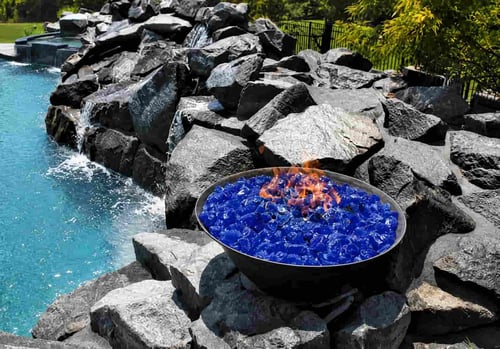
Blue iridescent fire glass in a pool fire bowl set into a natural rock waterfall. A great option for lagoon-style and tropical pool designs.
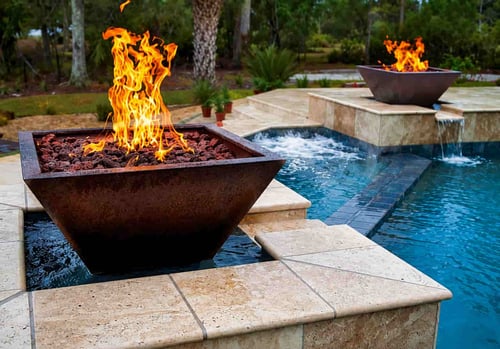
Square copper fire bowls on a raised bond beam, a sleek choice for contemporary and modern backyard pool designs.
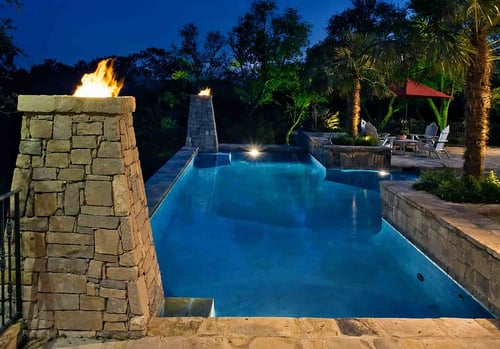
Twin pillar-style pool fire pits with flames that rise well above the pool perimeter, visible from inside the house.
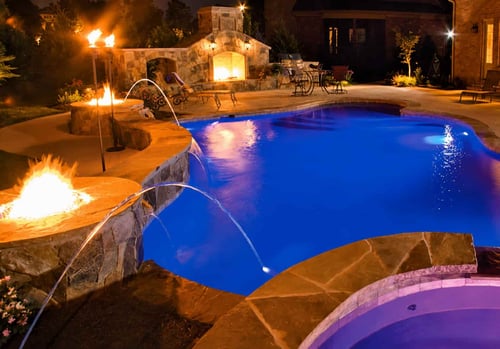
Integrated, stone-faced fire pits flanking a curved section of raised bond beam that doubles as bench seating.
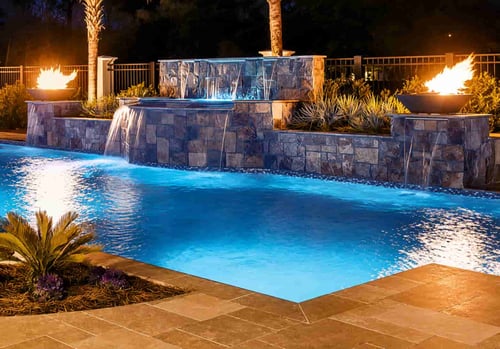
Fire bowls mounted above a raised cascade water feature, combining two of the most popular pool add-ons in one design.

Nestled into a rock waterfall, this fire bowl shows how well the feature blends with a rustic or lagoon-style aesthetic.
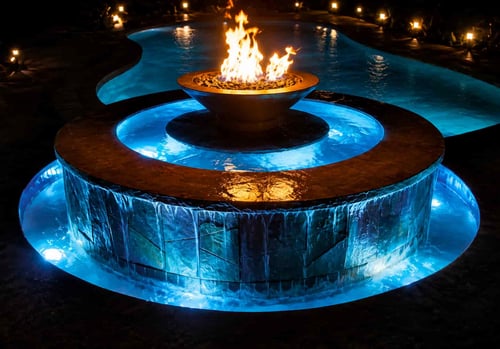
A fire bowl mounted on a free-standing pool fountain, a less common but distinctive alternative to bond beam placement.
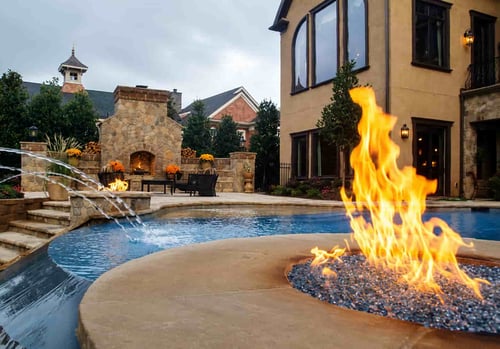
Fire pits built directly into the walls of an infinity-edge pool. These look dramatic even in daylight, not just at night.
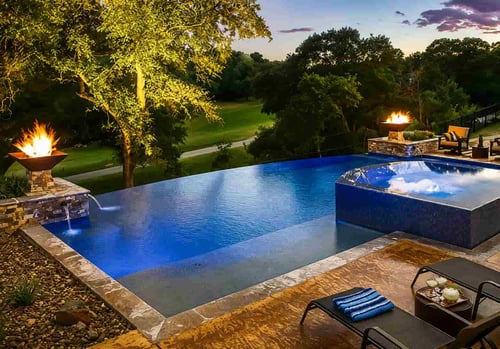
Two elevated fire bowls flanking an infinity pool, showing how fire features can anchor the entire backyard design.
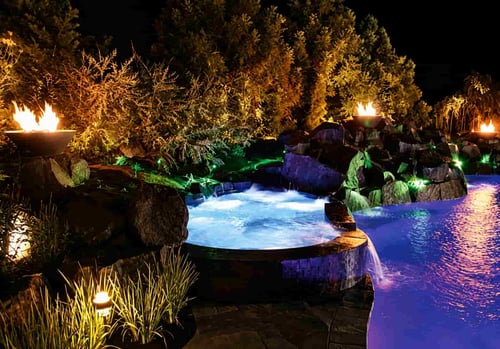
Multiple fire bowls distributed across a large custom rock waterfall, showing how fire can be layered into a complex water feature.
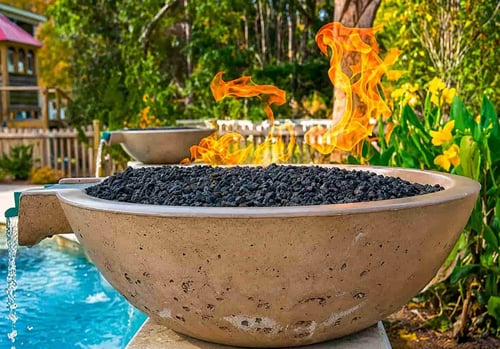
A combination water-and-fire bowl that cascades water and shoots flames simultaneously, one feature doing the work of two.
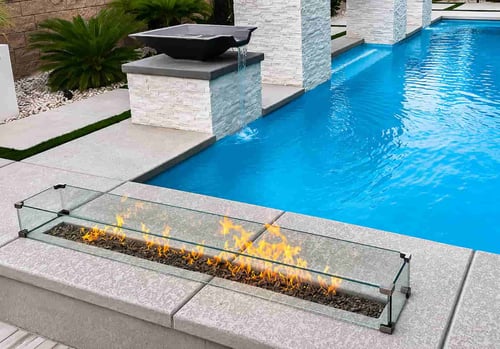
A glass-enclosed linear fire box installed along the pool perimeter, a contemporary alternative to the traditional fire pit.
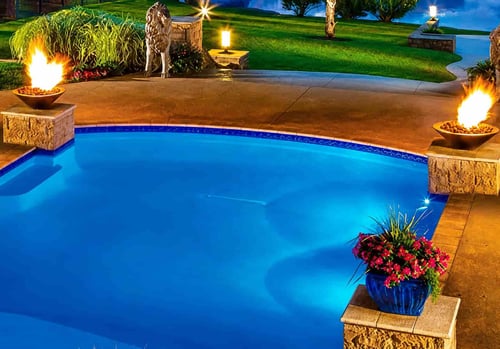
Elevated pool fire bowls paired with multicolor LED lighting, showing how fire and lighting work together for evening ambiance.
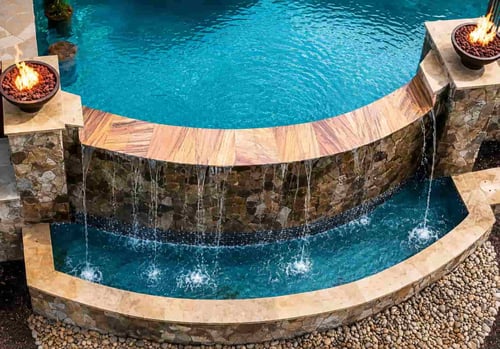
Copper fire bowls on the far side of an infinity-edge pool. When the feature is this far from the pool deck, a remote ignition system is the practical choice.
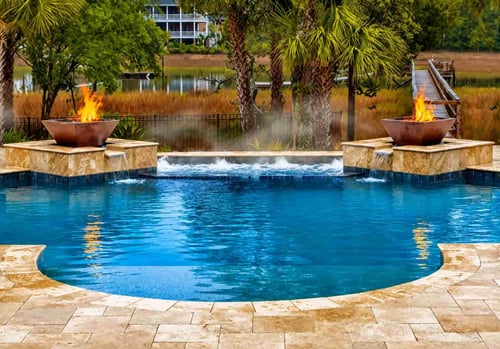
Copper fire bowls mounted on cascade water features framing a large custom spa.
Ready to Add a Fire Feature to Your Pool?
Whether you're building a new pool or remodeling an existing one, fire features can be incorporated into almost any project. The best way to find out what's possible for your backyard is to talk through the design with a pool builder.
Request a free consultation to get started.


